
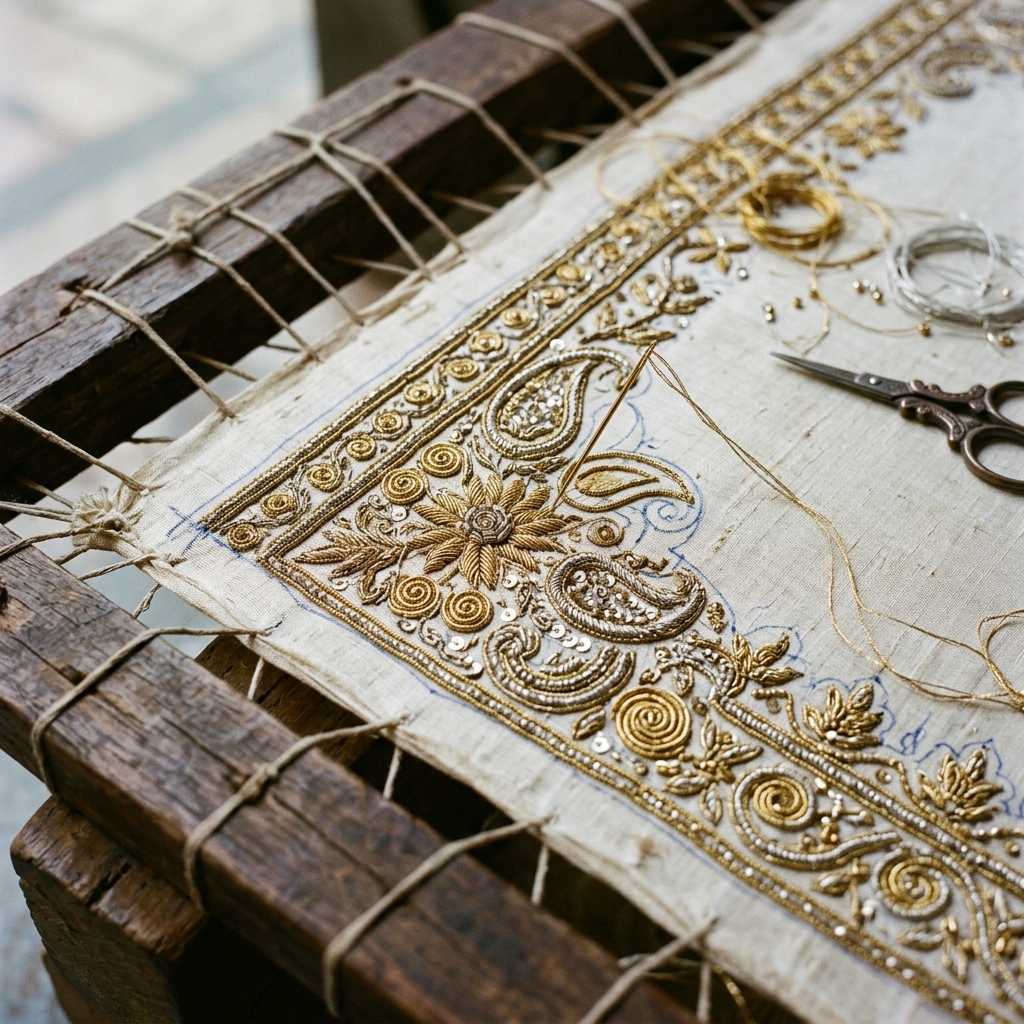
Zardosi is not just a method of embroidery; it is a legacy. Originating from Persia and popularized during the Mughal era in India, Zardosi translates to "gold embroidery" (Zar meaning gold, and Dosi meaning embroidery). At ASH Stylista, it forms the beating heart of our premium bridal wear.
01. The Meticulous Process
True Zardosi work is incredibly labor-intensive. It begins with the stretching of the fabric (usually silk, velvet, or rich satin) over a wooden framework called an 'Adda'. Our artisans, who have inherited this skill over generations, use a specialized crochet-like needle to weave gold and silver metallic threads through the fabric.
"Every stitch of Zardosi carries the weight of history. When a bride wears it, she is draped in centuries of royal tradition."
02. Materials Used
Unlike standard thread embroidery, Zardosi incorporates a variety of rich materials to create a 3D, embossed effect:
- Dabka: A fine coiled metallic wire.
- Salma: Zig-zag metallic threads.
- Kora: Dull, matte-finish metallic wires.
- Stones & Pearls: Semi-precious stones to add regal weight to the garment.
03. Why It Matters for Bridal Wear
Bridal lehengas demand a sense of grandeur and timelessness. The heavy weight and light-catching properties of Zardosi make it the perfect choice for evening wedding ceremonies. Because it is done entirely by hand, no two pieces are exactly identical, making your bridal outfit truly one-of-a-kind.
At our Vadodara studio, a single heavy bridal lehenga can take anywhere from 30 to 60 days of continuous handwork by multiple artisans. It is a slow, meditative process that results in a garment fit for royalty.